The Ephemeral Character

The Ephemeral Character

The Ephemeral Character

A self-theorised literary character trope observed and analysed in observation of four texts: The Lucy Poems, Lord of the Flies, The Little Prince, and Shadow of the Colussus.

Thus Nature spake—The work was done—
How soon my Lucy’s race was run!
She died, and left to me
This heath, this calm and quiet scene;
The memory of what has been,
And never more will be.

William Wordsworth, The Lucy Poems

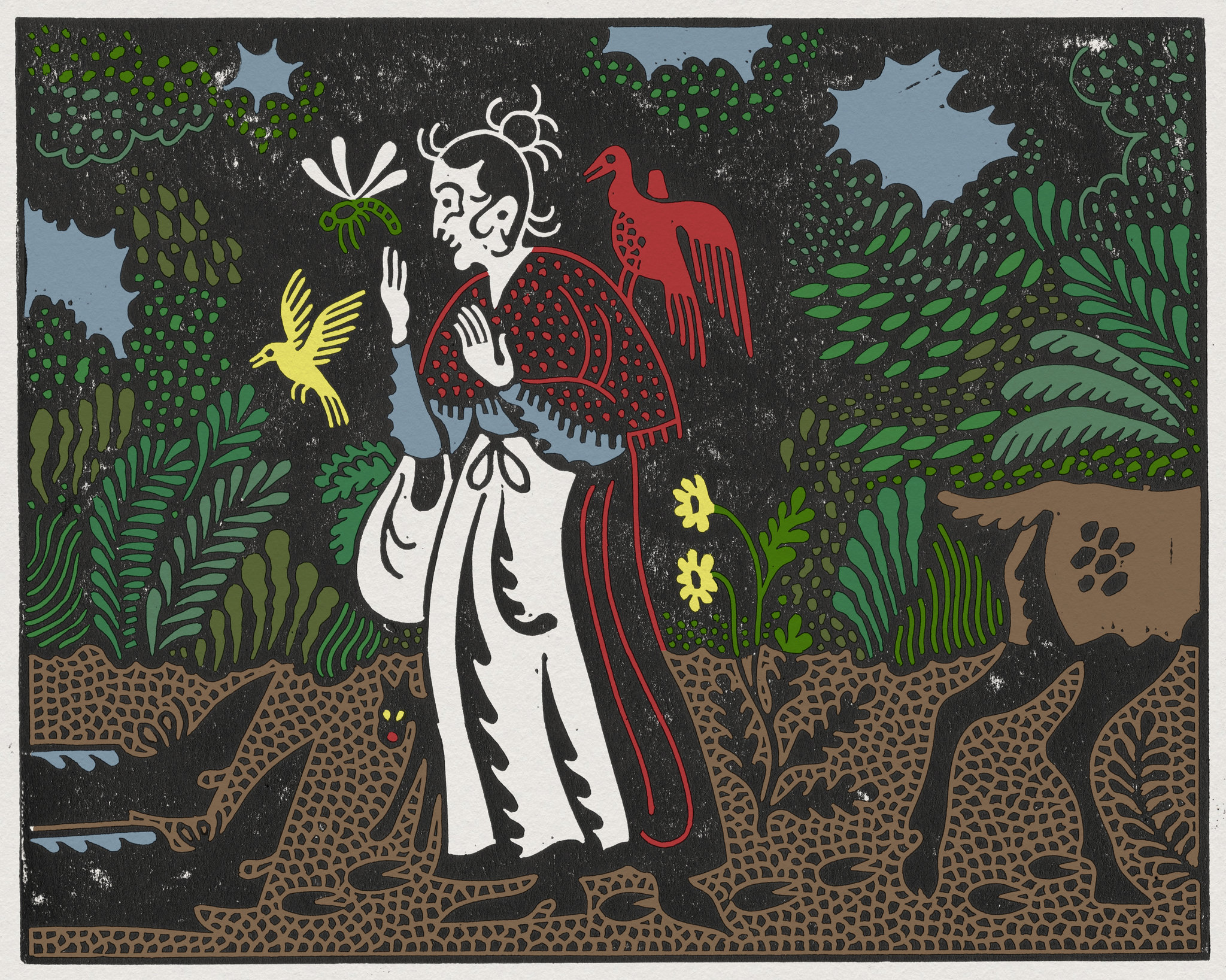
My ideation of the ‘ephemeral character’, is a distinct, wise, and fleeting character. Inspired by William Wordsworth’s Lucy poems collection (1798 – 1801), the transient character is often romanticised as a vessel devoted to love, a child of nature, and exists in some kind of solitude. Moreover, they are regarded as ephemeral, since to preserve the innocence of their youth, their shell must be discarded. This process is associated with divine intervention, where their body is assumed to be a shell, suggesting a spiritual transfer of the soul rather than crude death. Nature repeatedly plays a deliberate role in the interaction or comfort of these characters during their fleeting existence within the narrative.

01

Classic literature’s Lord of the Flies by William Golding, for instance, is a novel that dissects the truly destructive nature of human beings through an instance of isolation among a group of young boys marooned on an island. Their proximity, coupled with a growing desperation to survive, draws out an illusioned beast among them, which essentially embodies their own innate, primal reflections. One of the boys, Simon, is what can be assumed as the ephemeral character, whose role in the narrative is of a temporary presence, almost divine, harbouring qualities pure and innocent like an unscathed child. His character finds solace in nature and has a moral goodness that’s almost at par with the evil resident in the other boys. Simon’s character succumbs to a brutal yet compassionate death, within the water of the fluid ocean, as a means of nature’s removal once his desired impact is made to the plot.

“Surrounded by a fringe of inquisitive bright creatures, itself a silver shape beneath the steadfast constellations, Simon’s dead body moved out toward the open sea” (Golding 154).
02

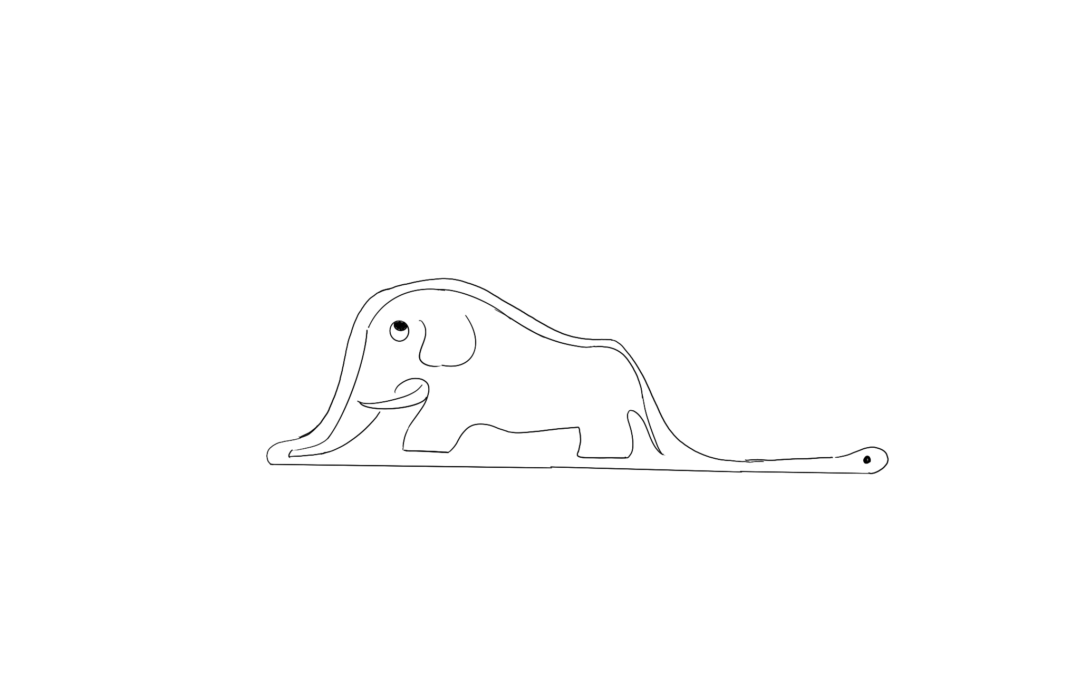
While this serves as a renowned example to testify the existence of such a character, I am interested in where it concerns Antoine de Saint-Exupéry’s novella, Le Petit Prince, or in English, The Little Prince. The Little Prince follows a fictional prince of alien origin and his curious interaction with the natural world beyond him. The little prince is an inquisitive child who abandons his beloved rose to seek clarity from ventures among planets. His learnings, which he, in turn, bestows on both the narrator and audience, exist through his role as an ephemeral character.

“You understand… it is too far. I cannot carry this body with me. It is too heavy. But it will be like an old abandoned shell. There is nothing sad about old shells…” (Exupéry 117)

Once the little prince satisfies himself and the narrative, his return to his planet is a willing bargain with death, by which he can rid himself of his shell and ensure not to cross the threshold of youth.

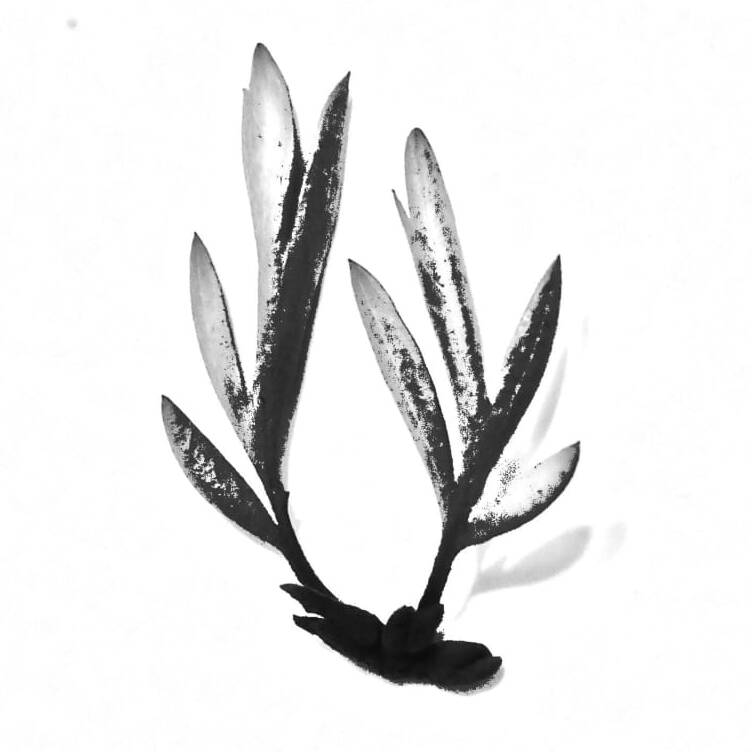
“Then the thorns – what use are they?” (Exupéry 31)

Deceptively simple, the questions the Little Prince proposes have depth and abstractions. The narrator is insufficient in regarding the prince’s question as vital, which motivates him to seek clarity elsewhere, in the comforts of the natural world in his solitary existence. His interactions with the rose, fox and snake, each symbolically rendered human, are what determine his comprehension of love with labour, wisdom in the intangible, and a resignation to death, respectively.

“Whomever I touch, I send back to the earth from whence he came,” the snake spoke again. “But you are innocent and true, and you come from a star…” The little prince made no reply. “You move me to pity — you are so weak on this Earth made of granite,” the snake said. “I can help you, someday, if you grow too homesick for your own planet. I can —” “Oh! I understand you very well,” said the little prince. “But why do you always speak in riddles?” “I solve them all,” said the snake. And they were both silent.” (Exupéry 80)
03

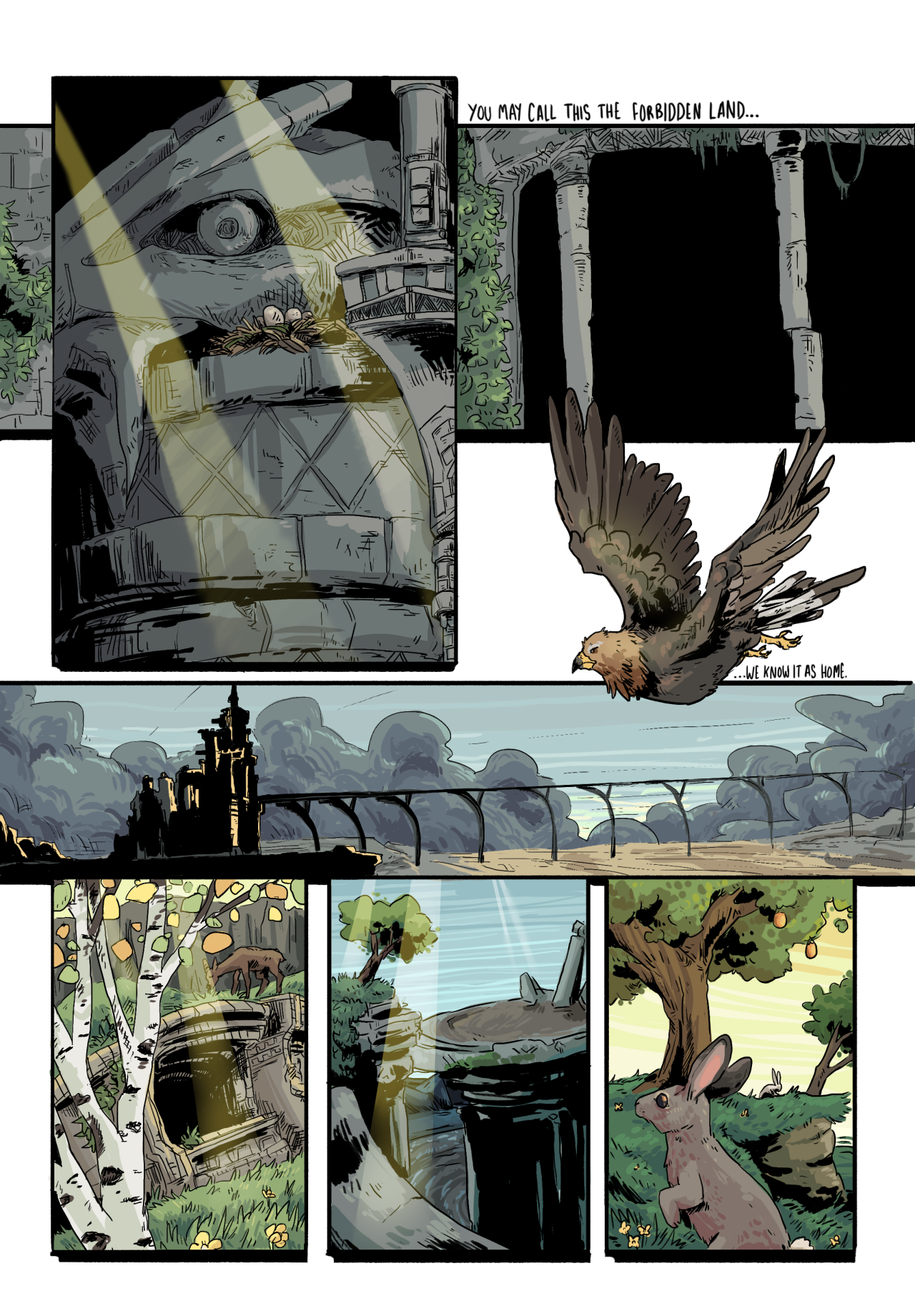
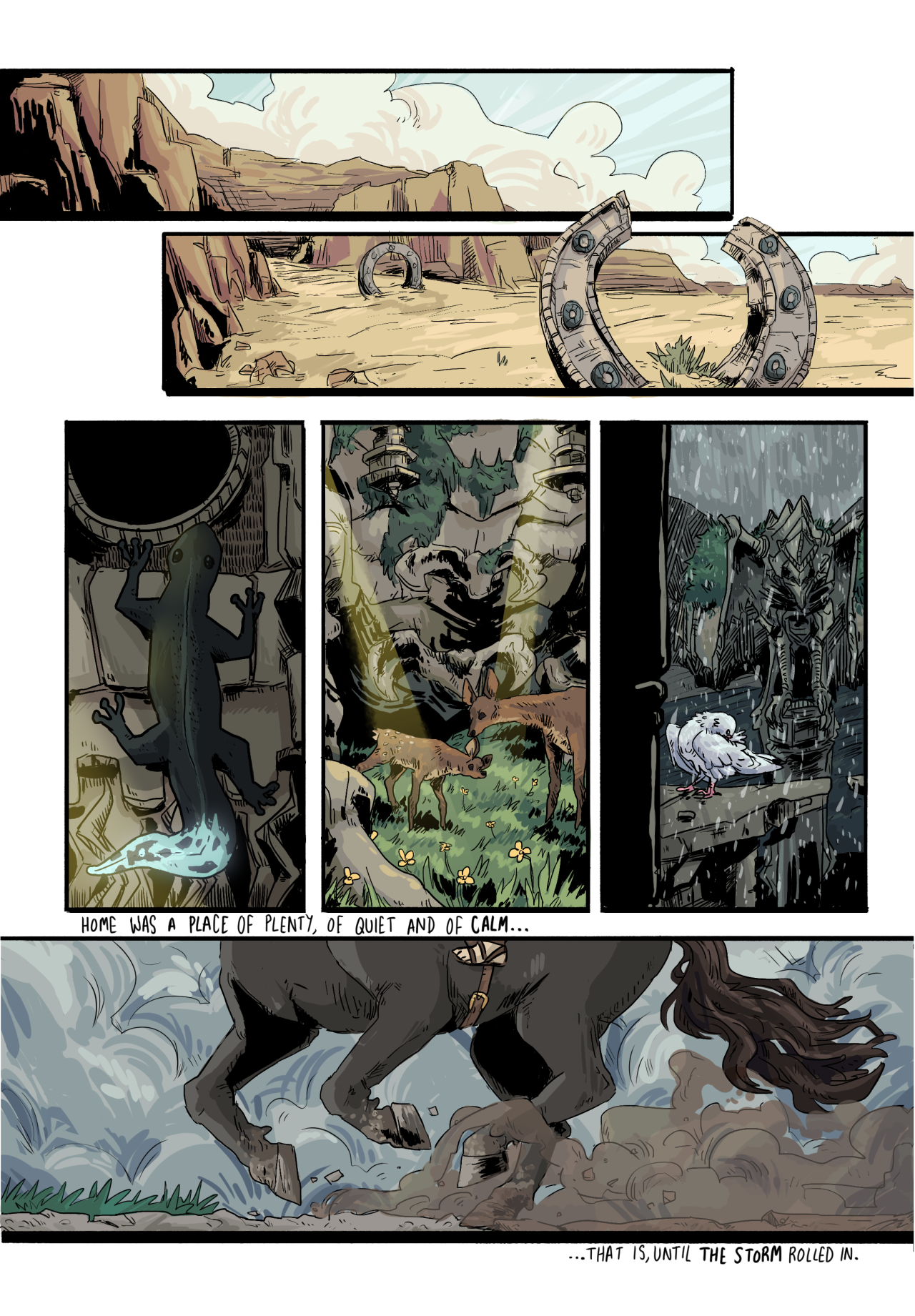
My final association with the ephemeral character is not exclusively from literature, as have my previous ones been, but from the 2005 PS2 video game, Shadow of the Colussus.

Wander, the protagonist is a young boy in search of the supernatural revival of a girl named Mono. He is given the task to locate and destroy sixteen colossi, distinct creatures scattered across the forbidden land he has arrived on. The exchange is made with Dormin, an entity that seeks release and manifestation. Although cautioned by Dormin that he may have to pay a great price to revive Mono, Wander sets out to search the land for the colossi and destroy them.

For the sake of Mono’s revival, Wander endures great physical deterioration. We learn how each of the colossi harbours fragments of Dormin’s essence, which had been scattered to render the entity powerless. But now, on the defeat of each colossus, these fragments inhabit Wander his demolition of them. The game embeds its players into the expanse of the setting to such depth, that through its audience, and the character of Wander, this connection to the land and its species ascribes him the characteristics of the ephemeral character. Interestingly, although he too must succumb to death, he is given an opportunity for rebirth, before he can cross the threshold of youth.

Essentially, I mean no accusation or conclusion from this analysis, rather I merely recall a unique series of connections to a strain of characters I have been keenly fond of.
Normativity & Deviation

Normativity & Deviation

Normativity & Deviation

on picking up a peculiar polish crime-thriller novel for my college literature course, i found an unlikely connection to queer theory.

texts:
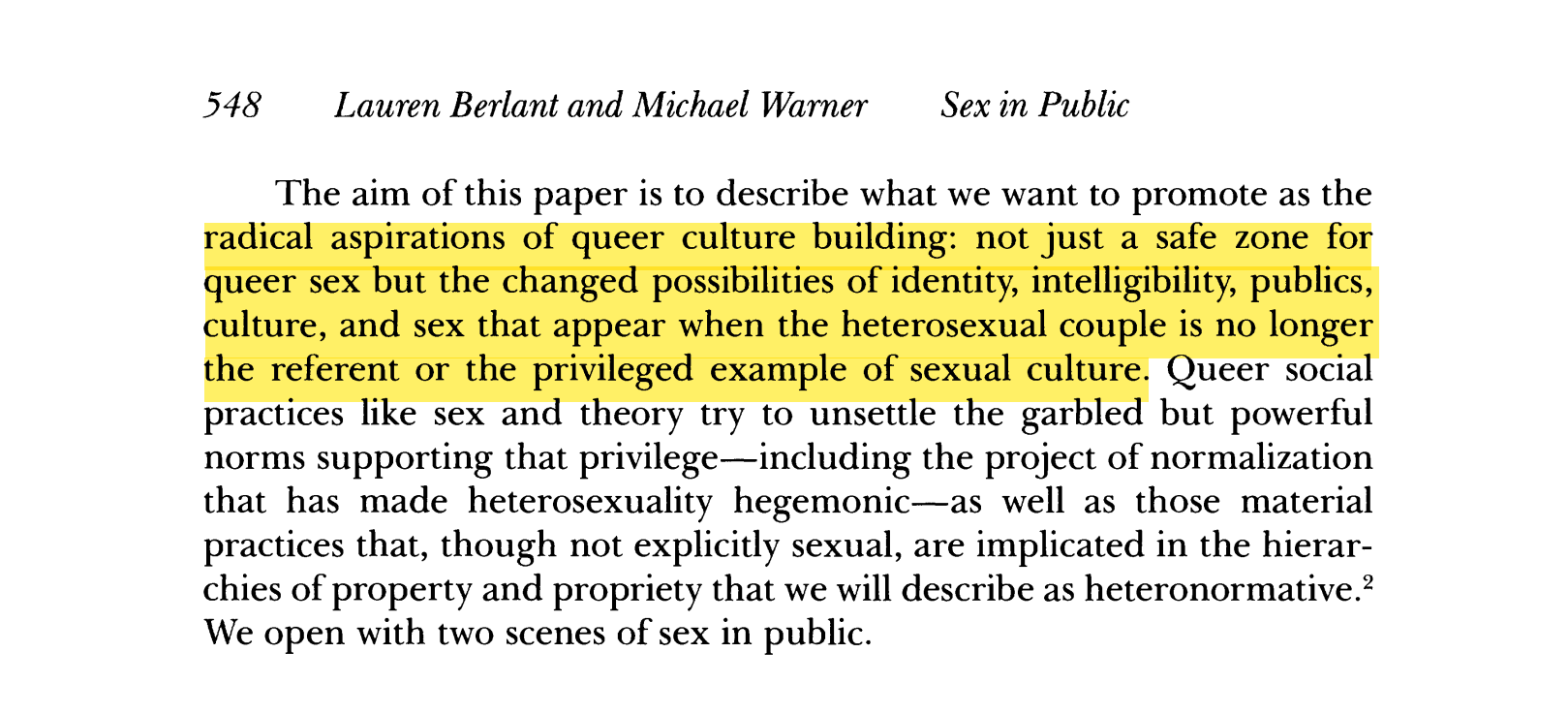
sex in public, berlant and warner
drive your plow over the bones of the dead,  olga tokarczuk

berland and warner have essentially theorised that the ‘public’ holds responsibility for the curation of ‘normativity’.  this suggests that heterosexuality conforms to the norm, and queer identities are ‘deviant’ – as defined by the public. (hence, ‘hetero-normativity’)

now for the novel, tokarczuk positions her protagonist, janina as the deviant. she is very quickly slotted into the stereotype of a ‘mad woman’ because of her older age, and relentless attempts to reconcile with the serial crimes taking place in her village. what little do they know, is her deviance grants her a weapon – to be invisible enough to be the one committing the crimes in the first place.

what janina proves here, is that a blind acceptance of what the public has defined for her, has, in its own way, allowed her to escape the public eye and survive as a deviant.

this deviance is unknown to the readers until the conclusion, where even her first-person narrative channels the readers’ suspicion away from herself. with her outright adamancy to have the cases investigated, lengthy accounts on ‘astronomical destiny’ and a delusional theory on animal-administered vengeance, janina is unlikely, even to her audience, to be responsible for the murders herself. her concoction of the narrative is blatantly ignored, yet successful in ascribing her older age and gender as a woman, into the category of delusional and timid. the ability of tokarczuk to invoke such complacency in the perception of her readers itself emphasises how simply the public’s construction of normativity can conceal one’s ability to recognise and acknowledge the existence of so-called ‘deviants’.

janina’s comprehension of her own perceived identity within her society is what propels her to aptly capitalise on it.

moments prior to her confession, Janina introspects:

Suddenly I saw the four of us in a different way – as if we had a lot in common, as if we were a family. I realized that we were the sort of people whom the world regards as useless … If we went missing, nothing would really change. Nobody would notice.

Tokarczuk 479, 480

her ‘family’ of misfits all conform to their prescribed identities: insignificant eccentrics.

and to top it off, janina truly does escape, aware that her loss would contribute little to the society she has abandoned.

to be able to contextualise berlant and warner’s theories into a crime thriller novel, truly exhibits how transcendent they are. such a leap is remarkable, as it only makes explicit how deeply relevant such a concept is, through the seemingly ‘random’ spaces they find in translation.

Isolation

Isolation

Isolation

during my ISC elective english course, i took up a research project referencing a novel and a play

research question: can i prove that each of the unassuming secondary characters of these two texts can be linked under the theme of ‘isolation’?

texts:
to kill a mocking bird
death of a salesman

unassuming secondary characters:
dill, mayella ewell
happy loman

from the convenience of a narrative pinhole, it’s easy to bask in a hero’s glory, than recount the people who brought them there. the people who end up having less glory, the people who stay the same as they were when the story began.

but what happens to them? if, on their own, do these characters matter? is all they are created for simply just foils to a more important, more relevant ‘main’ character?

this got me interested in the deceptive nature of what ‘secondary’ truly means to characters in a story.

yet, because plot holes carry greater weight than character holes, my curiosity was often left unattended.

i then rescaled all three texts from start to finish, collected all the possible evidence that i could muster, and presented a case study. a whiteboard with quotes, instances and connections, neatly rounding the corners of thumb pins in red thread.

i surprised myself too, but the case was solved. or at least, the connections closed.

a hint?

the lesser attention you attract, the more you are capable of saying.

to kill a mockingbird, is a story of a young girl in the 1930s, having a ‘regular’ childhood in parallel to her father’s battle in a court case. the girl, jean louse finch (scout, familiarly) befriends a boy named dill during her time in the novel. dill stays within the chapters of the novel that have to do with scout and her childhood. mayella, has to do with court side of scouts story. as the victim of the case her father is opposing.

both dill and mayella are very lonely.

death of a salesman is a play about willy loman, in relentless pursuit of a self-deluded ideal of the ‘american dream’. willy has two sons, bill and happy loman. the play is a montage of memories, dreams and confrontations that willy experiences as he essentially begins to lose his mind. happy, unlike his name – is the saddest character of them all. the only heir to willy’s pipe dream, who learns nothing from willy’s failures, and eventual death.

Dill

charles baker harris, formally, or ‘dill’ is a simple boy with a vivid imagination. he is the most enthusiastic of his friends, scout, and her brother jem – to seek the truth about their mysterious neighbour, boo radley.

his fascination with boo though, reveals a silent companionship. a sense of belonging to a man who seems as lonely as he is.

“Why do you reckon Boo Radley’s never run off?”

Dill sighed a long sigh and turned away from me.

“Maybe he doesn’t have anywhere to run off to. . . .”

[146]

what dill offers to scout (as the secondary to main character), is a face to call her ‘child world’. this is important because, as she stands privy to the court case her father atticus is defending, she enters the ‘adult world.’ her only respite and chance to remember her age, is dill. 

dill’s absence then coincides with the continued intrusion of the adult world upon scout’s childhood. and towards the latter half of the novel, is almost gone.

his final reappearance is during an integral juncture of the novel – which is when he offers scout an opportunity to flee for a short time back into the blithe of her ‘child’ world.

yet, dill has a story too. a runaway child of a dynamic childhood – and a place of stability in scout’s home.

“He was worn out, dirty beyond belief, and home.”

[143]

the author whispers to us on the margins of his visits to maycomb, that his vivid imagination and captivating tales, along with a fierce reluctance to talk about his father – can only mean he has a troubled life at home.

“Beautiful things floated around in his dreamy head. He could read two books to my one, but he preferred the magic of his own inventions.”

[156]

Mayella

mayella now, is the ‘adult side’ of scout’s world. a 19-year-old pitiable victim of a so-called rape case. yet, she is no victim of the case, as much as she is one of her upbringing. her father abuses and possibly molests her, and has convinced her to perjure herself in order to conceal the shame that it was a black man whom she leaned on for comfort.

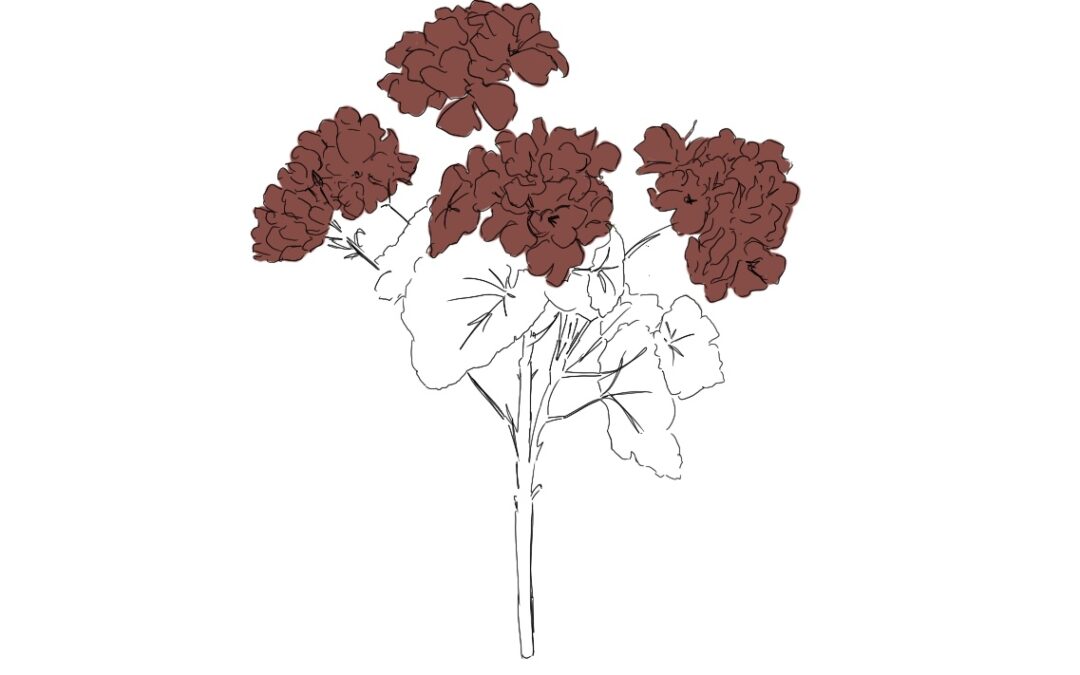
scout observes mayella’s environment, which is of a small tin-roofed cabin situated behind the town’s garbage dump, with a yard full of trash. she notes, though, that buried among this trash, is an oderly corner of the yard lined with well-tended red geraniums rumoured to belong to mayella. a seemingly irrelevant detail, but a telltale sign of how she sets herself apart from the rest of the ewells.

“It came to me that Mayella Ewell must have been the loneliest person in the world. She was even lonelier than Boo Radley, who had not been out of the house in twenty-five years. When Atticus asked her if she had any friends, she seemed not to know what he meant, then she thought he was making fun of her.”

[194]

scout reconciles mayella’s lonely nature to that of the ‘mixed folks’. set apart from the whites because “she lived among pigs” and from the blacks, because she was white to begin with. this suspended state of isolation encourages mayella to, for one, feel desperate enough to lean on a black man for comfort, and two, betray that man to obey her father’s wishes.

it is almost ironic then, that this compassion mayella sows in her geraniums, and sought from tom, was something that she hadn’t ever seen in her dismal and secluded life.

as atticus quotes,

“And so, a quiet, respectable, humble Negro who had the unmitigated temerity to ‘feel sorry’ for a white woman…”

was faced with punishment because a white woman

“…must destroy the evidence of her offence. What was the evidence of her offence? Tom Robinson, a human being.”

[207]

Happy

happy loman is a seasoned womaniser who encourages his fragile self-image by lying about his success. he emulates his father in his outdated belief that success comes from being ‘well-liked’ rather than hard work. however, it amounts to little under the shadow of his brother biff, who is idolised by his father.

so in respite, happy reinforces his sense of accomplishment by bragging about his sexual exploits – even though he already possesses all the hallmarks of material wealth.

“It’s what I always wanted. My own apartment, a car, and plenty of women. And still goddamnit, I’m lonely.”

[12]

this awareness does nothing, as his desire to be validated by his father will always find reasoning. so, he instead mimics his father with no compass of his own, treating women the same poor way his father treats his wife, linda.

at the end of the play, once willy has died, happy refuses himself the one thing that could make him happy by remaining bound in the comfort of someone else’s shadow. biff invites happy to come out west with him, as they had conspired at the beginning of the play, a prospect that seemed to excite happy. yet he puts down the offer, saying, “I’m staying right in this city, and I’m gonna beat this racket!” and that he will win willy’s dream for him. a helpless attempt to gain approval from a man who will not be able to validate him anyway.

Dill & Mayella

now that we have established that both characters are lonely, what sets them apart is how they use deception to cope with it.

dill, on one hand, embeds himself in stories of what could be instead of what is. but no matter how much he tries to escape the realities of his home life, he is strongly connected to his emotional sense of being (his empathy toward boo + his reaction to the court case).

mayella, on the other hand, turns toward spite and self-interest rather than empathy. even though she does exhibit nurturing and compassionate traits through the account of her well-kept geraniums, the mayella seen during the trial is hateful and cruel – a clear contradiction to this image. and perhaps a sad reality that not all loneliness converts to empathy.

Mayella & Happy

what makes mayella and happy similar, is the root of their isolated upringings as well as the manner in which they cope with it.

while mayella has an abusive father, happy has a neglectful one. both characters are unable to detach themselves from their paternal shadow and seek sexual intimacy as a sense of release.

mayella and happy are, hence, static characters with incomplete arcs. there is no resolution for them as they are not the ‘main’ characters of the story. mayella will continue to live a guilt-ridden life under the abuse and abandonment of her father, and happy will live out his remaining years trying to fulfil willy’s dream.

Happy & Dill

as far as crucial father figures come into play, both happy and dill have had inconsistent attention from their fathers. happy being overshadowed by his brother biff, and dill never having a static paternal head to look up to. as a result, both characters lose their grasp with reality and live in a self-deluded state of being.

dill with his elaborate made-up stories, and happy, blindly following a hollow ideal of willy’s version of the ‘american dream.’