The Ephemeral Character
A self-theorised literary character trope observed and analysed in observation of four texts: The Lucy Poems, Lord of the Flies, The Little Prince, and Shadow of the Colussus.
Thus Nature spake—The work was done—
How soon my Lucy’s race was run!
She died, and left to me
This heath, this calm and quiet scene;
The memory of what has been,
And never more will be.
William Wordsworth, The Lucy Poems
My ideation of the ‘ephemeral character’, is a distinct, wise, and fleeting character. Inspired by William Wordsworth’s Lucy poems collection (1798 – 1801), the transient character is often romanticised as a vessel devoted to love, a child of nature, and exists in some kind of solitude. Moreover, they are regarded as ephemeral, since to preserve the innocence of their youth, their shell must be discarded. This process is associated with divine intervention, where their body is assumed to be a shell, suggesting a spiritual transfer of the soul rather than crude death. Nature repeatedly plays a deliberate role in the interaction or comfort of these characters during their fleeting existence within the narrative.
01
Classic literature’s Lord of the Flies by William Golding, for instance, is a novel that dissects the truly destructive nature of human beings through an instance of isolation among a group of young boys marooned on an island. Their proximity, coupled with a growing desperation to survive, draws out an illusioned beast among them, which essentially embodies their own innate, primal reflections. One of the boys, Simon, is what can be assumed as the ephemeral character, whose role in the narrative is of a temporary presence, almost divine, harbouring qualities pure and innocent like an unscathed child. His character finds solace in nature and has a moral goodness that’s almost at par with the evil resident in the other boys. Simon’s character succumbs to a brutal yet compassionate death, within the water of the fluid ocean, as a means of nature’s removal once his desired impact is made to the plot.
“Surrounded by a fringe of inquisitive bright creatures, itself a silver shape beneath the steadfast constellations, Simon’s dead body moved out toward the open sea” (Golding 154).
02
While this serves as a renowned example to testify the existence of such a character, I am interested in where it concerns Antoine de Saint-Exupéry’s novella, Le Petit Prince, or in English, The Little Prince. The Little Prince follows a fictional prince of alien origin and his curious interaction with the natural world beyond him. The little prince is an inquisitive child who abandons his beloved rose to seek clarity from ventures among planets. His learnings, which he, in turn, bestows on both the narrator and audience, exist through his role as an ephemeral character.
“You understand… it is too far. I cannot carry this body with me. It is too heavy. But it will be like an old abandoned shell. There is nothing sad about old shells…” (Exupéry 117)
Once the little prince satisfies himself and the narrative, his return to his planet is a willing bargain with death, by which he can rid himself of his shell and ensure not to cross the threshold of youth.
–
“Then the thorns – what use are they?” (Exupéry 31)
Deceptively simple, the questions the Little Prince proposes have depth and abstractions. The narrator is insufficient in regarding the prince’s question as vital, which motivates him to seek clarity elsewhere, in the comforts of the natural world in his solitary existence. His interactions with the rose, fox and snake, each symbolically rendered human, are what determine his comprehension of love with labour, wisdom in the intangible, and a resignation to death, respectively.
“Whomever I touch, I send back to the earth from whence he came,” the snake spoke again. “But you are innocent and true, and you come from a star…” The little prince made no reply. “You move me to pity — you are so weak on this Earth made of granite,” the snake said. “I can help you, someday, if you grow too homesick for your own planet. I can —” “Oh! I understand you very well,” said the little prince. “But why do you always speak in riddles?” “I solve them all,” said the snake. And they were both silent.” (Exupéry 80)
03
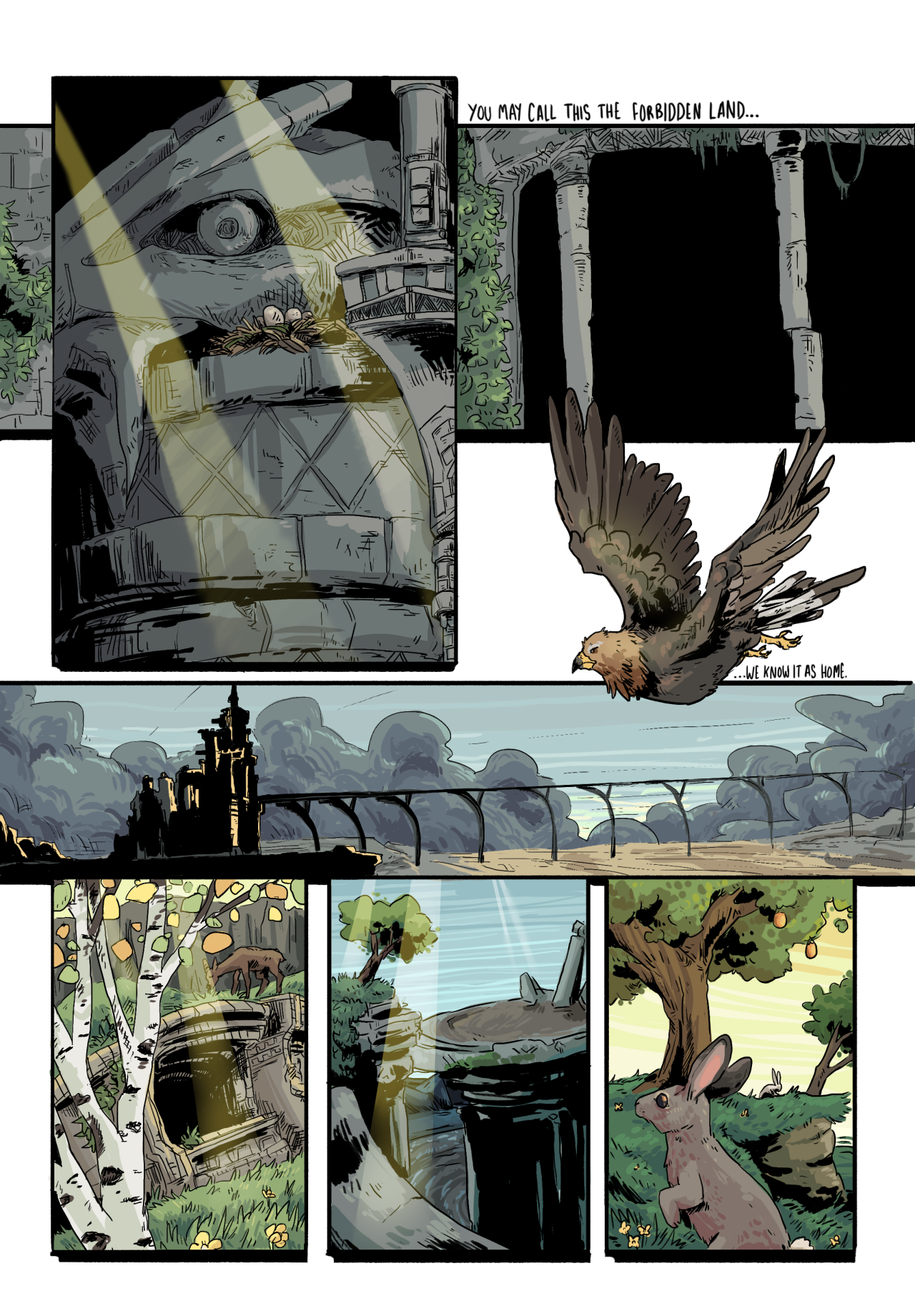
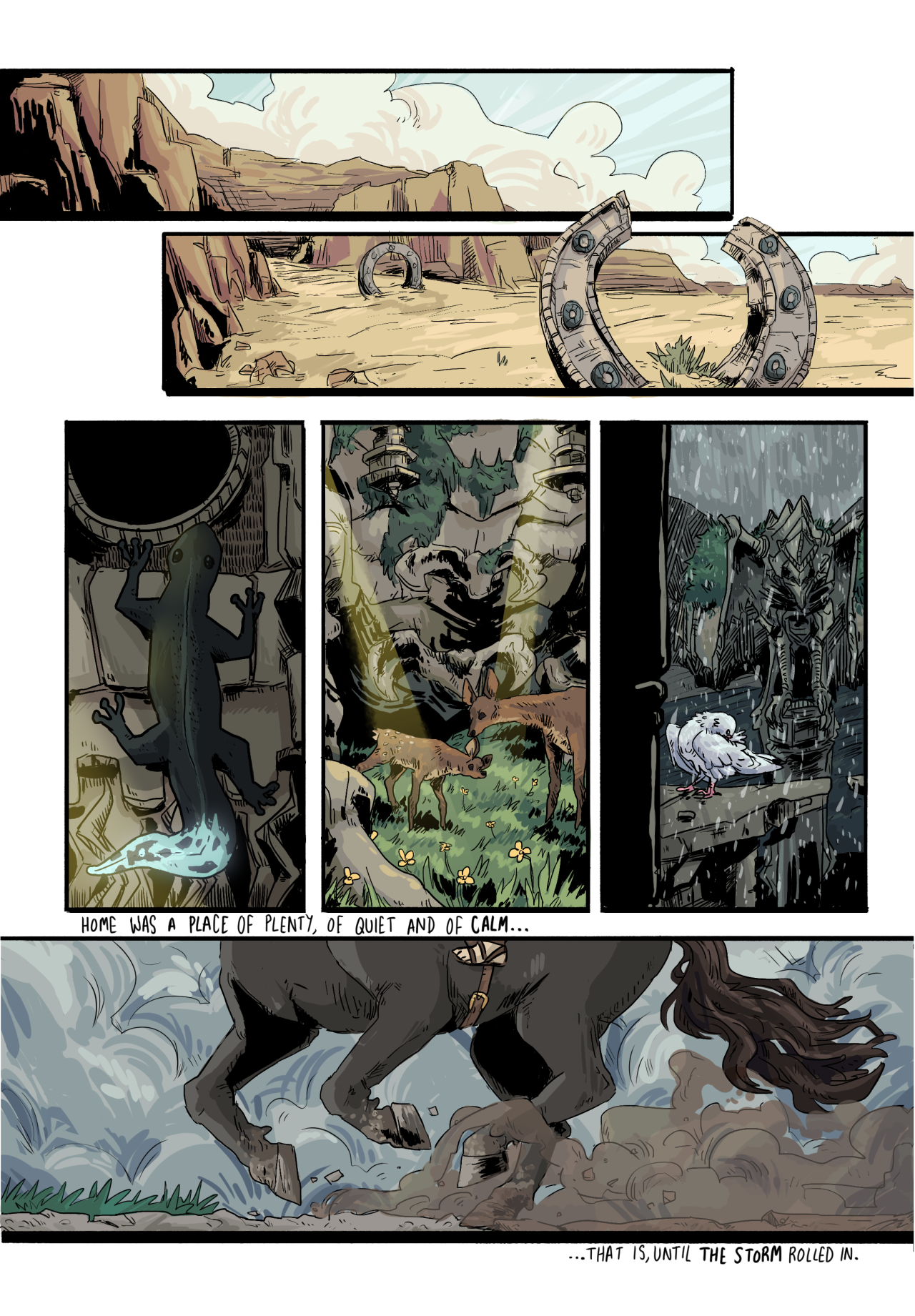
My final association with the ephemeral character is not exclusively from literature, as have my previous ones been, but from the 2005 PS2 video game, Shadow of the Colussus.
Wander, the protagonist is a young boy in search of the supernatural revival of a girl named Mono. He is given the task to locate and destroy sixteen colossi, distinct creatures scattered across the forbidden land he has arrived on. The exchange is made with Dormin, an entity that seeks release and manifestation. Although cautioned by Dormin that he may have to pay a great price to revive Mono, Wander sets out to search the land for the colossi and destroy them.
For the sake of Mono’s revival, Wander endures great physical deterioration. We learn how each of the colossi harbours fragments of Dormin’s essence, which had been scattered to render the entity powerless. But now, on the defeat of each colossus, these fragments inhabit Wander his demolition of them. The game embeds its players into the expanse of the setting to such depth, that through its audience, and the character of Wander, this connection to the land and its species ascribes him the characteristics of the ephemeral character. Interestingly, although he too must succumb to death, he is given an opportunity for rebirth, before he can cross the threshold of youth.
Essentially, I mean no accusation or conclusion from this analysis, rather I merely recall a unique series of connections to a strain of characters I have been keenly fond of.