Normativity & Deviation
on picking up a peculiar polish crime-thriller novel for my college literature course, i found an unlikely connection to queer theory.
texts:
sex in public, berlant and warner
drive your plow over the bones of the dead, olga tokarczuk
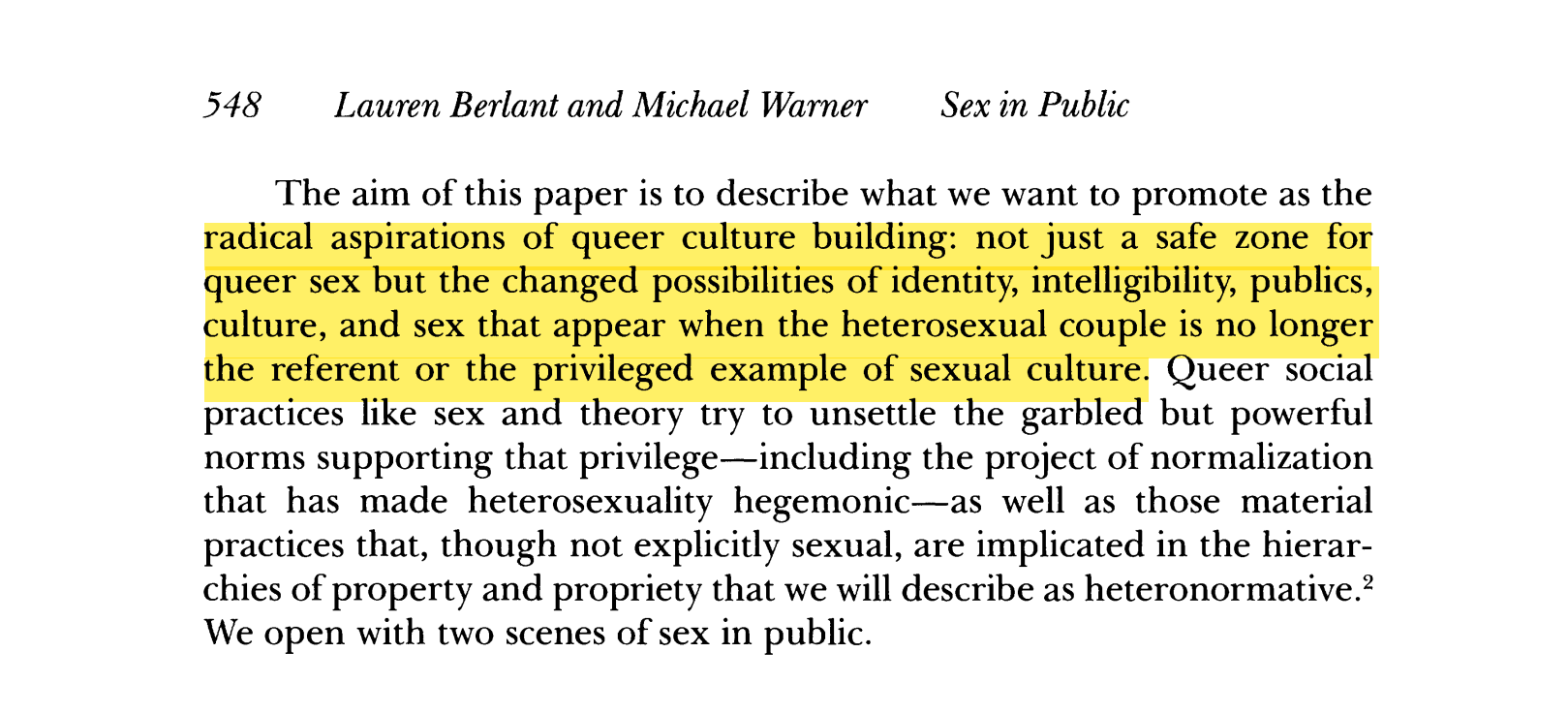
berland and warner have essentially theorised that the ‘public’ holds responsibility for the curation of ‘normativity’. this suggests that heterosexuality conforms to the norm, and queer identities are ‘deviant’ – as defined by the public. (hence, ‘hetero-normativity’)
now for the novel, tokarczuk positions her protagonist, janina as the deviant. she is very quickly slotted into the stereotype of a ‘mad woman’ because of her older age, and relentless attempts to reconcile with the serial crimes taking place in her village. what little do they know, is her deviance grants her a weapon – to be invisible enough to be the one committing the crimes in the first place.
what janina proves here, is that a blind acceptance of what the public has defined for her, has, in its own way, allowed her to escape the public eye and survive as a deviant.
this deviance is unknown to the readers until the conclusion, where even her first-person narrative channels the readers’ suspicion away from herself. with her outright adamancy to have the cases investigated, lengthy accounts on ‘astronomical destiny’ and a delusional theory on animal-administered vengeance, janina is unlikely, even to her audience, to be responsible for the murders herself. her concoction of the narrative is blatantly ignored, yet successful in ascribing her older age and gender as a woman, into the category of delusional and timid. the ability of tokarczuk to invoke such complacency in the perception of her readers itself emphasises how simply the public’s construction of normativity can conceal one’s ability to recognise and acknowledge the existence of so-called ‘deviants’.
janina’s comprehension of her own perceived identity within her society is what propels her to aptly capitalise on it.
moments prior to her confession, Janina introspects:
Suddenly I saw the four of us in a different way – as if we had a lot in common, as if we were a family. I realized that we were the sort of people whom the world regards as useless … If we went missing, nothing would really change. Nobody would notice.
her ‘family’ of misfits all conform to their prescribed identities: insignificant eccentrics.
and to top it off, janina truly does escape, aware that her loss would contribute little to the society she has abandoned.
to be able to contextualise berlant and warner’s theories into a crime thriller novel, truly exhibits how transcendent they are. such a leap is remarkable, as it only makes explicit how deeply relevant such a concept is, through the seemingly ‘random’ spaces they find in translation.